Traditional vs Digital BIM Clash Detection: A Complete
Posted: September 16, 2025
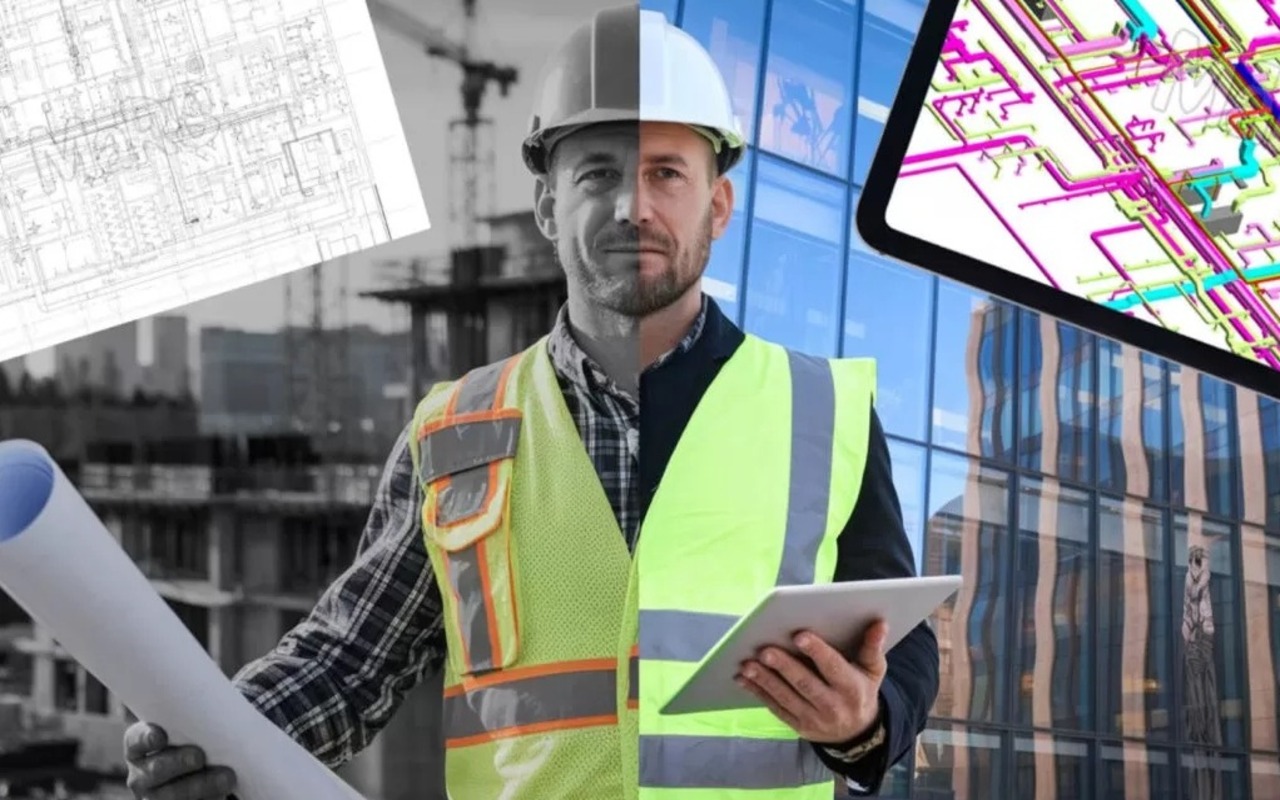
Effective coordination is the backbone of any successful construction projects. Inconsistent design data, misaligned disciplines, and overlooked conflicts can result in costly rework and delays. Traditional coordination methods have been used for decades, relying on manual clash detection using 2D drawings and communication between teams. Most of the design conflicts, however, were identified only during on-site construction, which often disrupted the workflow, project budget and timeline. While it’s true that many projects were successfully executed using manual detection methods in earlier time, they frequently led to increased project budgets and extended timelines due to late conflict identification.
However, with the rise of Building Information Modeling (BIM), clash coordination has evolved, enabling automated identification and resolution of conflicts before construction begins.
This blog breaks down the key differences between traditional coordination vs. BIM clash detection, their impact on construction workflows, and why BIM is rapidly becoming the industry standard.
Traditional Clash Detection: The Conventional Approach
Before BIM was widely adopted, clash detection was a time-consuming manual task. Engineers and designers had to compare multiple 2D drawings - such as floor plans, sections, and elevations - of different disciplines (architecture, structural, MEPFP) side by side. They relied on visual inspection and cross-referencing to identify interferences, overlaps, and space conflicts.
This process required meticulous attention and extensive coordination meetings, yet the possibility of human error remained high. Incomplete overlays, misinterpretation of dimensions, and lack of spatial context led to clashes going unnoticed until the construction phase.
Challenges with Traditional Detection Method
- Limited Visualization: 2D drawings do not provide a clear spatial representation, leading to oversight in clash detection.
- Time-Consuming Processes: Manually reviewing drawings and resolving conflicts can take weeks.
- High Risk of Errors: Coordination depends on human accuracy, making projects prone to overlooked conflicts.
- Costly Rework: Undetected clashes often surface during construction, leading to increased costs and schedule overruns.
Despite its limitations, this method has been the industry norm for decades, primarily due to familiarity and ease of implementation in smaller projects. However, as projects grow in scale and complexity, BIM-based clash detection has emerged as a superior alternative.
What is BIM Clash Detection?
BIM clash detection uses 3D models and intelligent automation to identify conflicts between all the different building systems. Navisworks, Revit, Solibri, and other BIM softwares provide real-time clash detection, ensuring conflicts are addressed at the design and pre-construction stage, rather than during construction.
Advantages of Clash Detection using BIM technology
- Proactive Clash Identification in Design Stage: BIM enables the detection of spatial and system-level clashes—between architectural, structural, and MEP-FP components—during the design and preconstruction phases. This early coordination significantly reduces design conflicts discovered later during construction.
- Intelligent, Discipline-Federated Models: By aggregating trade-specific models into a federated environment (e.g., Navisworks Manage), teams can perform rule-based clash detection across multiple systems. This includes hard clashes, soft clashes, and clearance violations affecting maintainability and access.
- Prefabrication and Accurate Procurement: Clash detection using BIM enhances the accuracy of design models, allowing general contractors and fabricators to confidently proceed with prefabrication of components. With a clash-free model, material quantities (BOQs) can be extracted more precisely, reducing waste and ensuring components fit as intended. This data-driven approach supports better procurement planning, minimizes on-site adjustments, and accelerates construction timelines.
- Reduced RFI Volume and Faster Resolution Cycles: With automated clash detection, fewer RFIs are raised due to coordination issues. Project teams resolve design conflicts more efficiently, leading to fewer delays and smoother communication across trades.
- Actionable Clash Reports and Prioritization: BIM platforms generate detailed clash reports that can be filtered by trade, location, or priority. This helps project teams systematically review, assign, and close out coordination issues based on project-criticality.
- 3D Contextual Visualization of Conflicts: Unlike 2D drawings, BIM allows project teams to visualize clashes in a 3D context, improving spatial awareness and helping stakeholders quickly understand and resolve issues in model coordination meetings.